

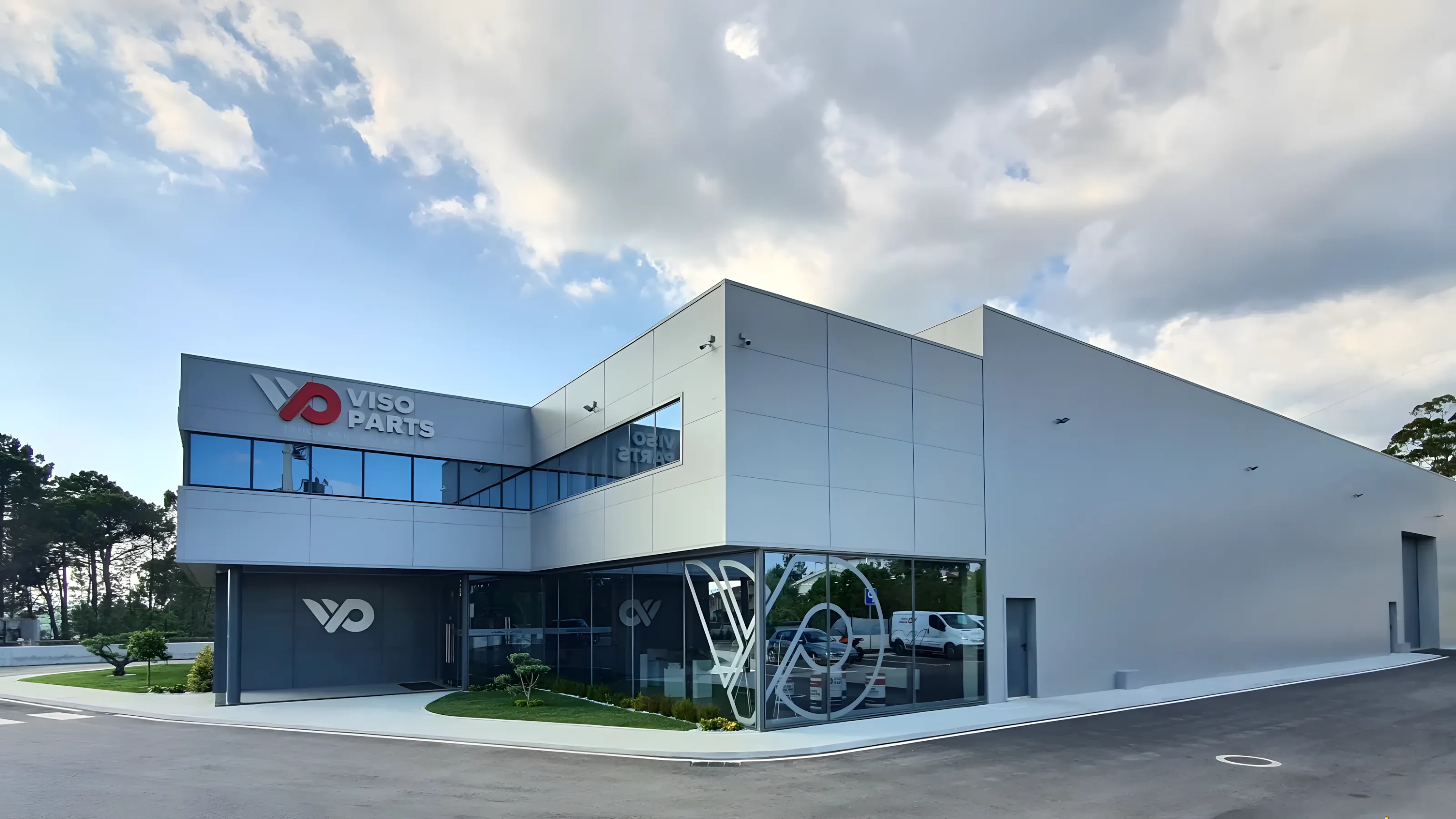
Visoparts: the audit a class-A building didn't expect
Energy audit, smart HVAC and lighting control and self-consumption solar at an industrial site in Portugal's Centro region. An estimated 256 MWh generated and 88 tonnes of CO₂ avoided over the system's lifetime.
Even an A-rated building has room to improve. At Visoparts, the audit revealed what the numbers didn't say: air conditioning running in empty spaces, a car park fully lit when half would do. The solar came after - on a more efficient foundation.
Sustainability starts with knowing where energy is wasted.
Visoparts, a certified specialist in parts and accessories for trucks and semi-trailers, wanted to take a concrete step in its energy transition. Even with a recent building and an A energy rating, there was room to improve - and the audit was the starting point.
The challenge
Identify energy waste in an already efficient building, implement intelligent control measures, and install own solar generation - all integrated into a coherent decarbonisation strategy.
- 256 MWhestimated lifetime production
- 88 000 kgof CO₂ emissions avoided
Audit, measures and installation
Enbiente carried out a full energy audit that revealed abnormal consumption in the air conditioning and exterior lighting. Based on that diagnosis, efficiency measures were implemented and the photovoltaic system was installed.
- Full energy audit of the building (A energy rating)
- HVAC management controller to prevent use outside occupied hours
- Zone-based lighting routines in the car park
- Photovoltaic self-consumption installation (UPAC)
- Estimated 256 MWh of production over the system's lifetime
- 88,000 kg of CO₂ emissions avoided
The result
Visoparts became more efficient, greener, and better prepared for the energy future. The combination of audit, control measures, and own solar generation shows that decarbonisation is not a single-piece project - it is an integrated strategy, built in layers.