

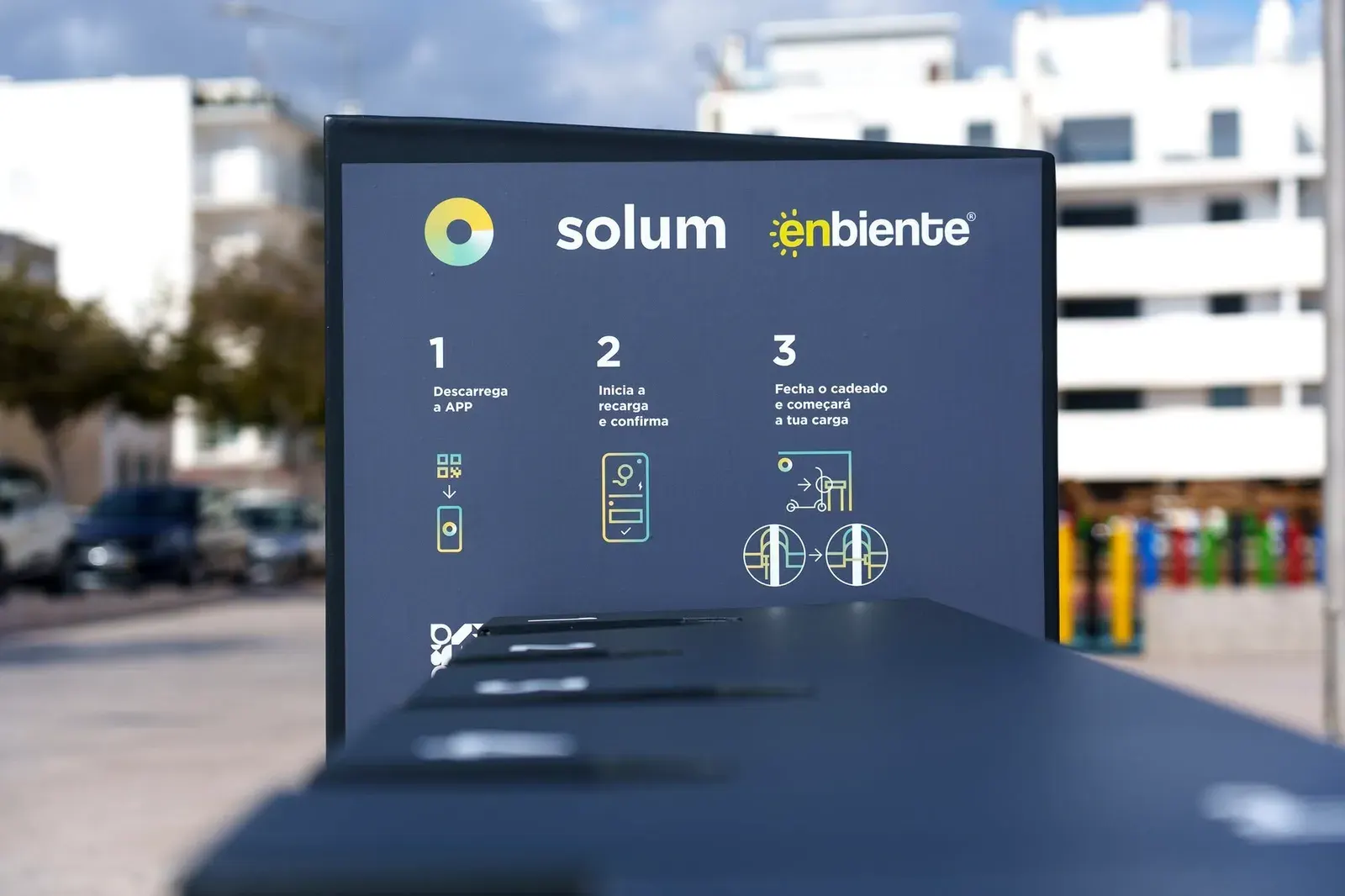
Three stations for bikes and scooters: electric micromobility in Olhão
Three parking and charging stations for bicycles and scooters in Olhão, delivered within the Bairro Comercial Digital project.
Micromobility takes hold where there is somewhere to park and charge. In Olhão, that infrastructure went into three points with footfall of their own: Parque do Levante, the Market Square, and Avenida da República, next to the courthouse. Bikes and scooters now have a place of their own in the urban space.
Infrastructure that makes sustainable mobility more accessible.
The shift towards more sustainable mobility also depends on infrastructure that makes the alternatives to conventional transport simple, safe, and accessible. As part of the Bairro Comercial Digital project, the Municipality of Olhão set out to strengthen the conditions for using light, sustainable modes of transport. Enbiente was responsible for installing the new parking and charging stations for bicycles and scooters, reinforcing the urban infrastructure dedicated to micromobility.
The challenge
Create parking and charging points properly integrated into the urban space, able to serve the needs of private users and shared mobility systems alike.
- 3parking and charging stations
- 3strategic locations across Olhão
Design and installation
Enbiente installed three stations designed for bicycles and scooters, electric or conventional, in locations chosen for the footfall they already generate and for how they fit into the design of the public space. The work was completed in October 2025.
- Installation of three parking and charging stations for bicycles and scooters, electric or conventional
- Infrastructure prepared for private use and for shared mobility systems
- Deployment across three strategic locations in Olhão: Parque do Levante, the Olhão Market Square, and Avenida da República, next to the courthouse
- Integration of the stations into the existing design of the public space
- Works completed in October 2025
The result
Olhão now has dedicated micromobility infrastructure, with better conditions for parking and charging bicycles and scooters. The project supports a more functional use of the urban space and widens the range of lower-impact mobility options, keeping pace with how the needs of the city and its users are evolving.