
Is your photovoltaic system ready for extreme weather conditions?
Published on 26 January 2026 by Catarina Costa
- Solar PV
- Energy Efficiency
- Storage & Backup
When rain becomes heavier, wind gains strength or episodes of storms and snow appear, one question often comes up immediately: is the photovoltaic system ready for this?
It is a legitimate concern, especially in a context where extreme weather events are becoming increasingly frequent.
The answer, however, is not in the weather. It is in the project.
Photovoltaic systems are designed for outdoor conditions
A photovoltaic system is designed to live outdoors for decades. Rain, wind, temperature variations and days without sun are not unexpected exceptions. They are scenarios considered from the initial sizing and design stage.
When a system is properly planned, bad weather does not represent an additional risk. In most cases, it only means a temporary reduction in production, which is perfectly normal and technically expected.
What is normal on bad-weather days
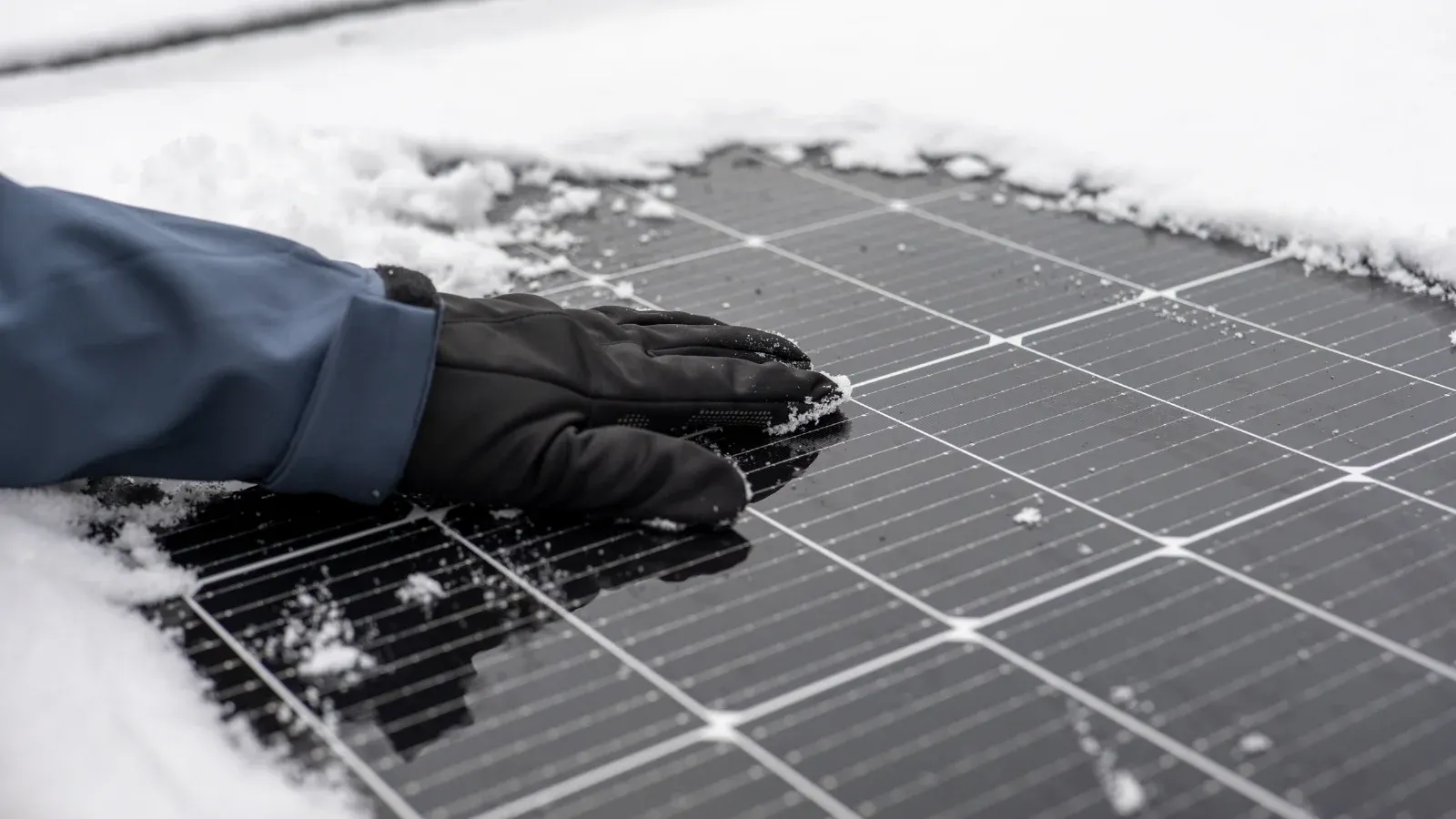
On days with heavy rain or very cloudy skies, production is expected to decrease. In the case of snow, there may even be a temporary stop while the panels remain covered.
These behaviours do not indicate a fault or failure. They simply reflect the solar radiation available at that moment.
Where the real problems appear
Interestingly, when problems arise during storms or extreme conditions, the cause is rarely the weather event itself.
In most cases, what fails is what cannot be seen. Undersized structures, missing or poorly coordinated electrical protections, installations carried out without the necessary rigour, or components that were not properly integrated into the system.
These are silent weaknesses that may go unnoticed for months or years and only become visible when the system is truly put to the test.
That is why two apparently similar systems can behave so differently in the same storm. The difference is not in the panels, but in the engineering that supports them.
Should I switch off the photovoltaic system during bad weather?
In most cases, the answer is no.
In a properly sized, correctly installed and duly protected system, there is no need to switch it off during rain, wind or storms.
On the contrary, switching it off by instinct can create problems that did not exist before, interrupt system monitoring and delay the detection of situations that really require technical attention.
The importance of technical follow-up over time
Like any technical infrastructure, a photovoltaic system does not end on the day it is installed. Over time, it is exposed to natural wear, vibrations, connection degradation and component ageing.
This is where technical follow-up and periodic inspections become decisive. Not to react to bad weather, but to anticipate risks, confirm that everything continues to operate within the criteria defined in the project and ensure reliability when conditions become more demanding.
Engineering prepared for real conditions
At Enbiente, every system is designed and followed by engineering teams and specialised technical teams, from the initial sizing stage to monitoring throughout its useful life.
The goal is not only to guarantee performance on ideal days, but also to ensure safety, robustness and peace of mind when conditions are no longer favourable.
In the end, the conclusion is simple
Extreme weather conditions are not, by themselves, the real test of a photovoltaic system.
The real test is the quality of the project, the installation and the technical follow-up over time. When that foundation is solid, the system does exactly what it is meant to do: produce energy safely and reliably, even when the weather does not help.