

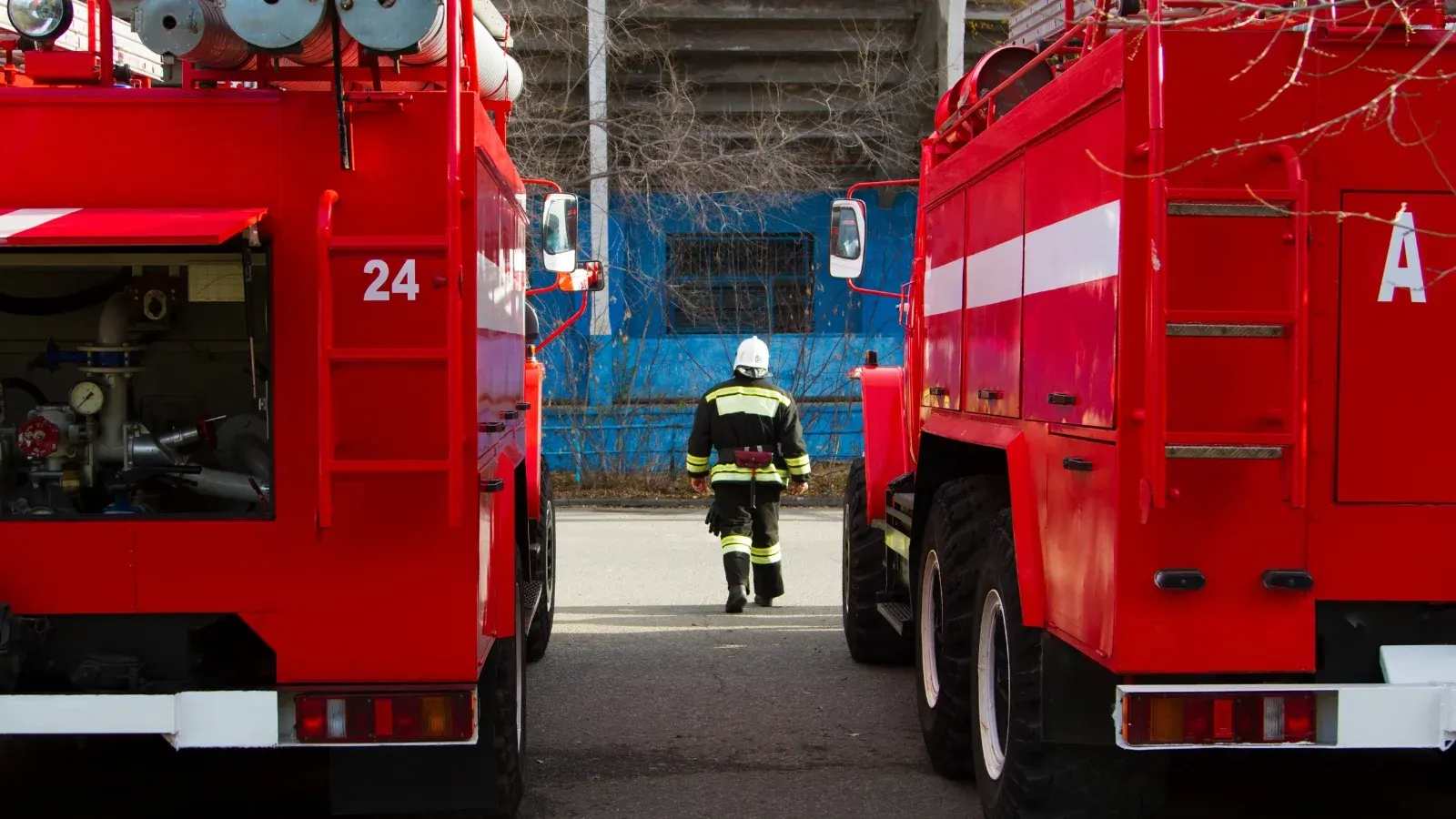
The Centro 2030 call that gives fire brigades a real investment window until 2026
Published on 27 February 2026 by Catarina Costa
- Incentives & Policy
- Energy Efficiency
- Business & ESG
In this post
Some civil protection funding opportunities appear to be designed for those working on the ground, yet often end up trapped in models where fire brigades participate as partners rather than as project promoters. In Portugal’s Centro region, there is a call that changes that scenario in a concrete way.
The CENTRO2030-2024-37 call, “Civil protection and integrated risk management (ITI CIM)”, is open and accepts applications until 30/06/2026, at 18:00. The indicative allocation is €30,000,000, with ERDF support and a maximum co-financing rate of 85%.
Who can apply directly
The call explicitly identifies eligible beneficiaries that include:
- Humanitarian Associations of Volunteer Firefighters (AHBV)
- Entities that operate Professional Fire Brigades
This detail is decisive, because it allows the application to be submitted by the entity itself, provided it complies with the call requirements.
The most important rule in the call
The call includes a filter that determines, from the outset, whether a project is eligible to move forward:
The operation must have a total calculated cost above €200,000.
There is an even more relevant point:
To calculate that total cost, only expenses that fall within the eligible cost categories are counted.
In practical terms, this means it is not enough to add up everything an entity would like to do. The project must exceed €200,000 using only what the call accepts as eligible expenditure.
What the call aims to finance
The aim is to support investments that increase resilience to extreme events and strengthen prevention, response capacity and integrated risk management in civil protection.
The eligible actions are essentially organised into three areas:
- Infrastructure and resources for fighting rural fires
- Prevention, decision-support and rural fire-fighting systems
- Crisis management using information systems, surveillance, monitoring and risk mapping
Eligible costs: what can be included in the budget
The call lists, among others, the following eligible costs:
- Studies, plans, projects and preparatory activities, including cost-benefit analysis when applicable
- Information, dissemination and awareness actions required for the operation
- PPE and individual sustainability equipment
- Operational civil protection and rescue vehicles
- Services for forestry work and heavy machinery or vehicles for the forest fire defence network
- Resources and equipment for responding to major accidents and disasters
- Technology and software, remote risk monitoring, public alert systems, technical consultancy for risk assessments and emergency plans, data loading and digitalisation
- Construction, expansion or refurbishment works for operational civil protection infrastructure
- Construction and requalification of fire stations, when framed within the infrastructure network for operational reinforcement
- Inspection, safety coordination and technical assistance
- Price revisions under the applicable terms, when they relate to the eligible value of completed works
Important note on land
Land acquisition may be eligible when indispensable, but it is limited to 10% of the total eligible expenditure, subject to specific conditions.
Non-eligible costs: what should not be included
The call identifies a set of expenses that tend to create deductions or compromise eligibility, including:
- Recoverable VAT
- Cash payments
- Second-hand equipment
- Operating, maintenance or repair costs linked to exploitation
- Contracts with payments defined as a percentage of co-financing or eligible expenditure
How to move forward without wasting time
A strong application starts with three simple validations:
- Confirm that the entity is an eligible AHBV or professional fire brigade body.
- Build a budget that exceeds €200,000 using only eligible costs.
- Frame the investment within the call’s eligible actions, with clear operational impact.
The call also foresees the need for a favourable opinion from ANEPC within the technical assessment and suitability analysis regarding risks and vulnerabilities.
The call is open. So is the opportunity.
What separates a strong application from a fragile one is almost always the same: structure, eligibility and the right budget.
At Enbiente, we support fire brigades and territorial entities in preparing applications to CENTRO2030-2024-37, focusing on the points that truly influence approval:
- Framing the investment within the call’s typologies
- Building the budget to comply with the €200,000 rule using eligible costs
- Preparing the descriptive memorandum and technical justification with a focus on impact and operational capacity
- Organising evidence, timeline and project maturity
- Supporting the process through submission with a compliance checklist
Do you want to move forward with clarity?
Send us the investment objective and a preliminary list of acquisitions and works. We will provide a quick, direct and objective reading of the project’s fit and application route.
We support fire brigades in preparing projects with technical rigour and real impact in the territory.