
What Is a Heat Pump and How Can It Make Your Home More Efficient?
Published on 18 August 2022 by Catarina Costa
- HVAC
- Energy Efficiency
- Solar PV
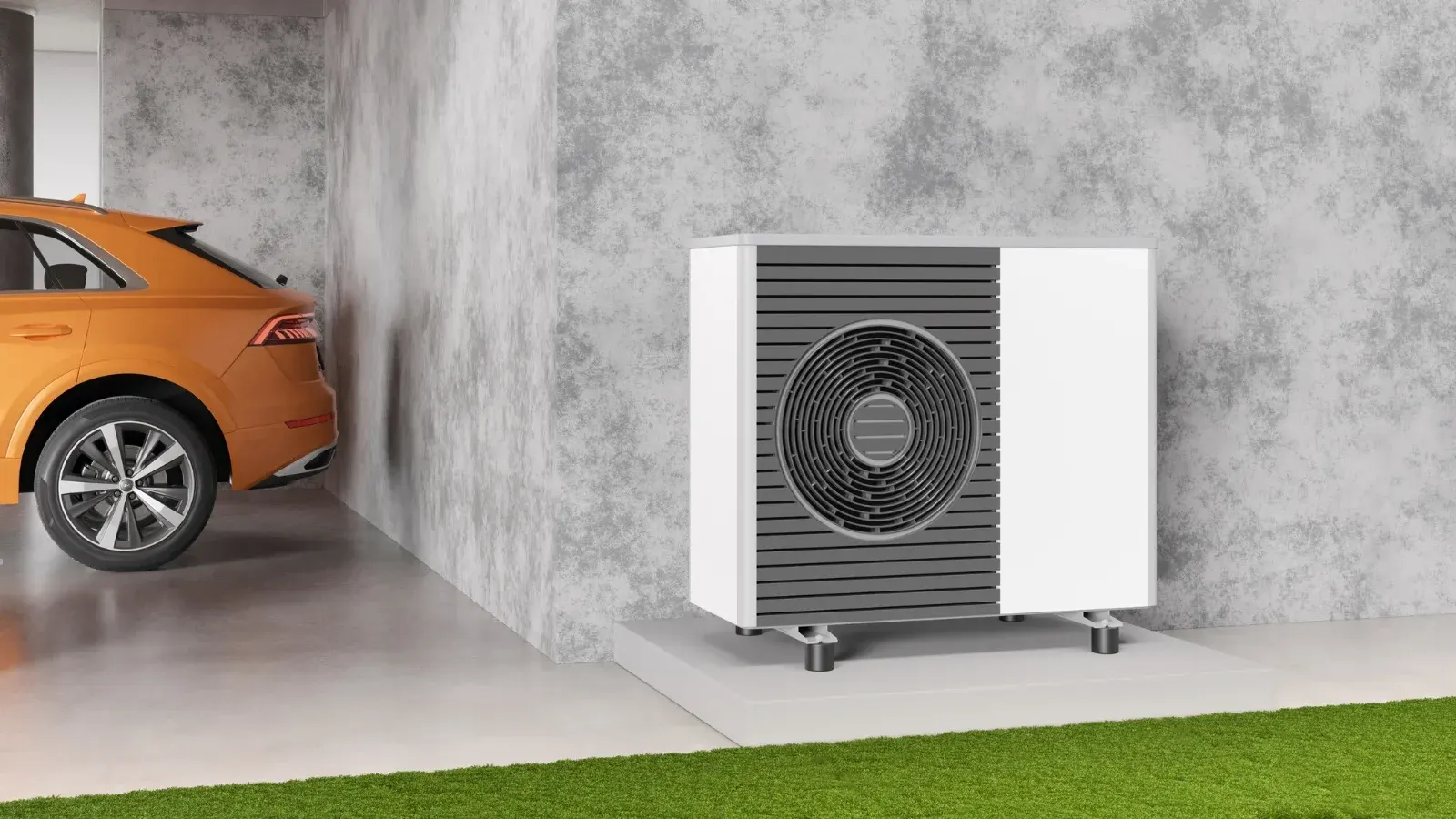
A heat pump is thermodynamic equipment that uses free energy from ambient air to produce hot or cold water, heat or cool spaces and supply domestic hot water.
How it works
The principle is similar to a refrigerator, but reversed. The heat pump extracts heat from the air and uses it to heat water or indoor spaces.
The cycle includes heat capture, refrigerant compression, heat transfer and expansion, restarting the process.
Types of heat pumps
Monobloc
All components are integrated into a single outdoor unit, with low noise and possible reversible operation.
Split
Composed of an outdoor and indoor unit, it offers installation flexibility and operation similar to air conditioning systems.
Advantages
Heat pumps provide domestic hot water, heating, cooling, compatibility with radiators and fan coils, low consumption and reduced maintenance.
Efficiency and savings
COP is usually between 3 and 5. This means that for every 1 kW consumed, the system can generate between 3 and 5 kW of heat. With photovoltaic energy, operating costs can be strongly reduced.
Enbiente
Enbiente analyses household consumption, presents the appropriate solution and handles installation and system optimisation.